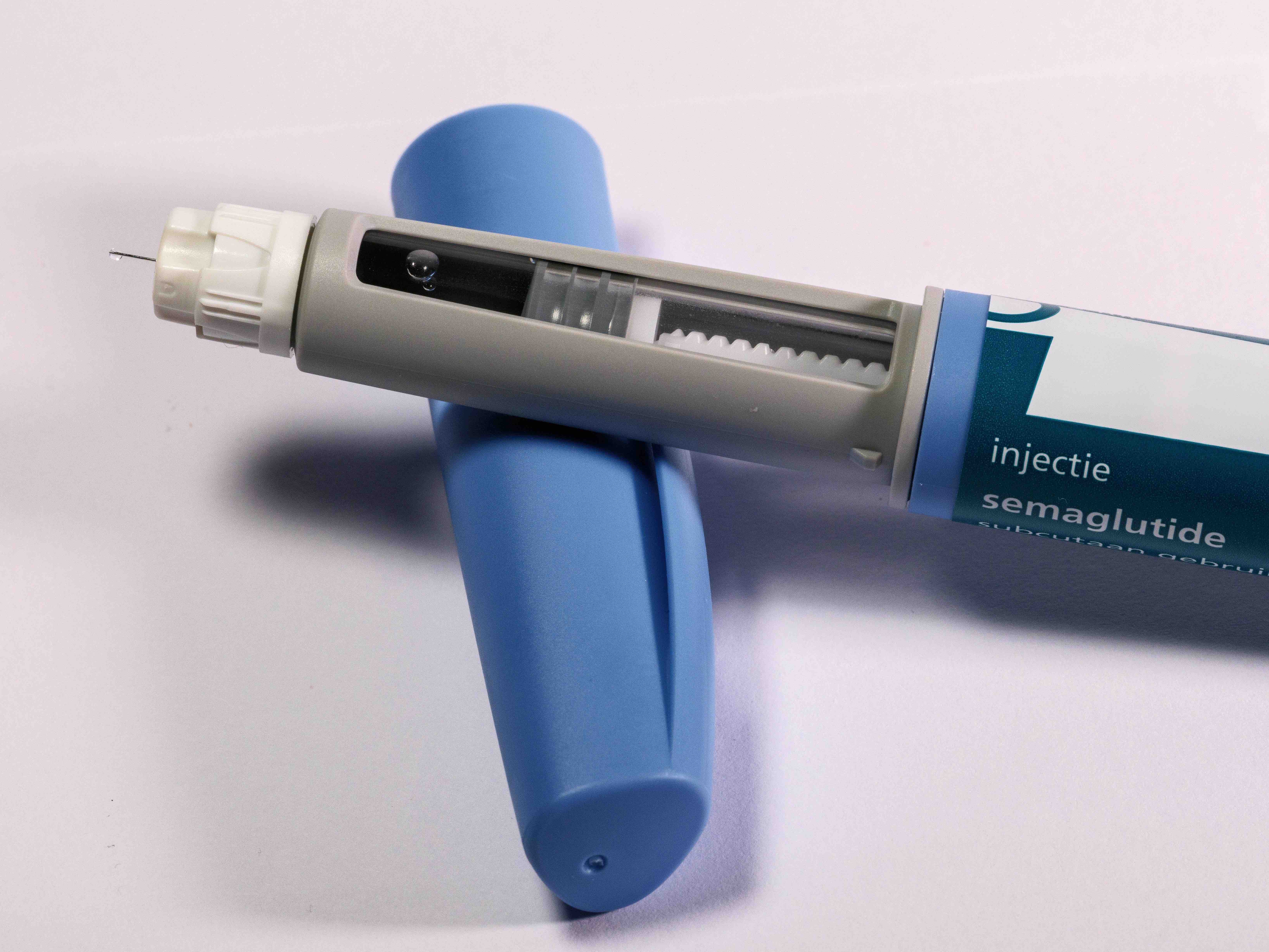

GLP-1 medications, such as Ozempic, have been popularized by celebrities for weight loss transformations. With a new oral GLP-1 medication now available in Canada, interest in GLP-1s continues to grow. While they can be highly effective tools for blood sugar management and weight loss, they aren't a good option for everyone, and they don't guarantee the results that social media may have you think.
What Are GLP-1 Medications?
Glucagon-like peptide (GLP-1) is a hormone your body produces naturally. Secreted by specialized cells lining the small intestine, it normally coordinates blood sugar control, appetite, and energy balance after eating, acting as a metabolic brake and fullness signal.
GLP-1 agonists are a class of medications that mimic the naturally occurring GLP-1 our bodies make, amplifying and sustaining this signal far longer than the body's own hormone would. The result is improved blood sugar regulation and reduced appetite.
Until recently, most GLP-1 medications were only available as injections. Oral semaglutide (Rybelsus) is now approved in Canada.
How It Works
GLP-1 medications work through several mechanisms that help regulate appetite and blood sugar:
- Delayed gastric emptying: Food moves more slowly through the stomach, helping you feel fuller for longer and naturally reducing food intake.
- Reduced glucagon production: These medications help suppress glucagon, a hormone that raises blood sugar levels when fasting. GLP-1s particularly inhibit glucagon production when blood glucose is already elevated.
For individuals with insulin resistance or type 2 diabetes, this can lead to meaningful improvements in blood sugar control, insulin sensitivity, and body weight.
Comparing Options
Semaglutide - Injectable (GLP-1)
- Brand names: Ozempic, Wegovy
- Weight loss: ~10-16% over approximately 18 months
- For someone weighing 180 lbs, expect roughly 18-29 lbs
- Cost: ~$400–800/month, depending on dosage
Semaglutide - Oral (GLP-1)
- Brand name: Rybelsus
- Weight loss: ~5-13% over approximately 18 months
- For someone weighing 180 lbs, expect roughly 9-23 lbs
- Cost: ~$270/month
The lower weight loss with oral semaglutide is largely explained by bioavailability - oral semaglutide is absorbed at roughly 1%, meaning a much smaller fraction of the drug reaches circulation compared to an injection.
Tirzepatide - Injectable (GLP-1/GIP)
- Brand name: Mounjaro
- Weight loss: ~13-21% over approximately 18 months
- For someone weighing 180 lbs, expect roughly 23-38 lbs
- Cost: ~$800/month
Tirzepatide adds a second mechanism by also activating GIP (glucose-dependent insulinotropic polypeptide) receptors. GLP-1 and GIP work through complementary pathways - GIP does not simply amplify GLP-1 signalling but acts on its own receptor, enhancing insulin sensitivity on top of appetite suppression.
Costs are approximate and reflect current Canadian list prices. Coverage and out-of-pocket costs vary by province and insurance plan.
Important Considerations
While GLP-1s can be effective, they are not a standalone solution.
Because these medications suppress appetite, most patients enter a calorie deficit. Without adequate protein intake and resistance training, a significant portion of that weight loss may come from muscle mass rather than body fat.
This matters because muscle tissue plays an important role in maintaining metabolism. Loss of muscle mass can contribute to a slower metabolism and increase the likelihood of rebound weight gain if the medication is discontinued.
To help preserve muscle mass during treatment, it is important to focus on:
- Adequate protein intake
- Strength or resistance-based exercise
- Sustainable lifestyle habits alongside medication use
In my practice, I typically won't prescribe a GLP-1 unless my patient is already exercising regularly, as the risks associated with loss of muscle mass can be significant.
Side Effects
With GLP-1 medications side effects are common, particularly in the early weeks of treatment or after dose increases.
The most frequent are gastrointestinal:
- Nausea (most common, often improves with time)
- Vomiting, diarrhea, or constipation
- Reflux or bloating
Less common but worth knowing about:
- Gallbladder disease: Rapid weight loss of any kind increases gallstone risk, and GLP-1s appear to carry a small additional risk. Symptoms like right-sided upper abdominal pain should be investigated.
- Pancreatitis: Rare, but patients with a history of pancreatitis are generally not good candidates for these medications.
- Mild increase in heart rate: Usually modest and clinically insignificant for most people, but relevant for those with pre-existing heart conditions.
- Injection site reactions: Redness or irritation at the injection site, typically minor.
There has also been some discussion about mood and mental health changes. The research here is still evolving and a causal link has not been firmly established, but it is worth flagging any significant mood changes to your prescriber.
These medications are contraindicated in individuals with a personal or family history of medullary thyroid carcinoma or a condition called MEN2 (multiple endocrine neoplasia type 2).
Monitoring
Starting a GLP-1 medication is not a set-it-and-forget-it prescription. Good monitoring makes treatment safer and helps catch problems early.
Before starting, your provider should assess:
- Fasting glucose/insulin and HbA1c
- Kidney and liver function
- Lipid panel and blood pressure
- Weight baseline
- Thyroid and pancreatic history
- Current medications
Can a Naturopathic Doctor Prescribe GLP-1 Medications?
Yes. In British Columbia, naturopathic doctors hold prescribing authority and are able to prescribe, monitor, and adjust GLP-1 medications where clinically appropriate.
What this means practically is that you don't need a separate referral or a family doctor waitlist to explore whether these medications are right for you. An ND can complete the full picture - reviewing your health history, ordering and interpreting baseline bloodwork, prescribing the appropriate medication and dose, and following up regularly to assess your response and make adjustments over time.
This is particularly well-suited to naturopathic practice because GLP-1 medications work best as part of a broader plan. Nutrition, body composition, exercise habits, and metabolic health are all central to getting good outcomes and avoiding the pitfalls - and these are areas where NDs spend a significant amount of clinical time. Prescribing the medication is one piece; building the foundation around it is what makes the difference long-term.
If you're curious whether a GLP-1 medication may be appropriate for you, book in with one of our naturopathic doctors for a full assessment.
Final Thoughts
GLP-1 medications can be valuable tools for improving metabolic health, particularly when combined with nutrition, exercise, and long-term lifestyle changes. The best treatment approach is highly individualized and should consider overall health goals, medical history, and sustainability.
If you have questions or want to explore your options, we're here to help - book in with one of our naturopathic doctors to discuss the potential benefits, risks, and treatment options available to you.
Citations
Wilding JPH, Batterham RL, Calanna S, Davies M, Van Gaal LF, Lingvay I, McGowan BM, Rosenstock J, Tran MTD, Wadden TA, Wharton S, Yokote K, Zeuthen N, Kushner RF; STEP 1 Study Group. Once-Weekly Semaglutide in Adults with Overweight or Obesity. N Engl J Med. 2021 Mar 18;384(11):989-1002. doi: 10.1056/NEJMoa2032183. Epub 2021 Feb 10. PMID: 33567185.
Fornes A, Huff J, Pritchard RI, Godfrey M. Once-Weekly Semaglutide for Weight Management: A Clinical Review. J Pharm Technol. 2022 Aug;38(4):239-246.
Knop FK, Aroda VR, do Vale RD, Holst-Hansen T, Laursen PN, Rosenstock J, Rubino DM, Garvey WT; OASIS 1 Investigators. Oral semaglutide 50 mg taken once per day in adults with overweight or obesity (OASIS 1): a randomised, double-blind, placebo-controlled, phase 3 trial. Lancet. 2023 Aug 26;402(10403):705-719.
Wharton S, Lingvay I, Bogdanski P, Duque do Vale R, Jacob S, Karlsson T, Shaji C, Rubino D, Garvey WT; OASIS 4 Study Group. Oral Semaglutide at a Dose of 25 mg in Adults with Overweight or Obesity. N Engl J Med. 2025 Sep 18;393(11):1077-1087.
Elmaleh-Sachs A, Schwartz JL, Bramante CT, Nicklas JM, Gudzune KA, Jay M. Obesity Management in Adults: A Review. JAMA. 2023 Nov 28;330(20):2000-2015.
Zhao L, Cheng Z, Lu Y, Liu M, Chen H, Zhang M, Wang R, Yuan Y, Li X. Tirzepatide for Weight Reduction in Chinese Adults With Obesity: The SURMOUNT-CN Randomized Clinical Trial. JAMA. 2024 Aug 20;332(7):551-560.